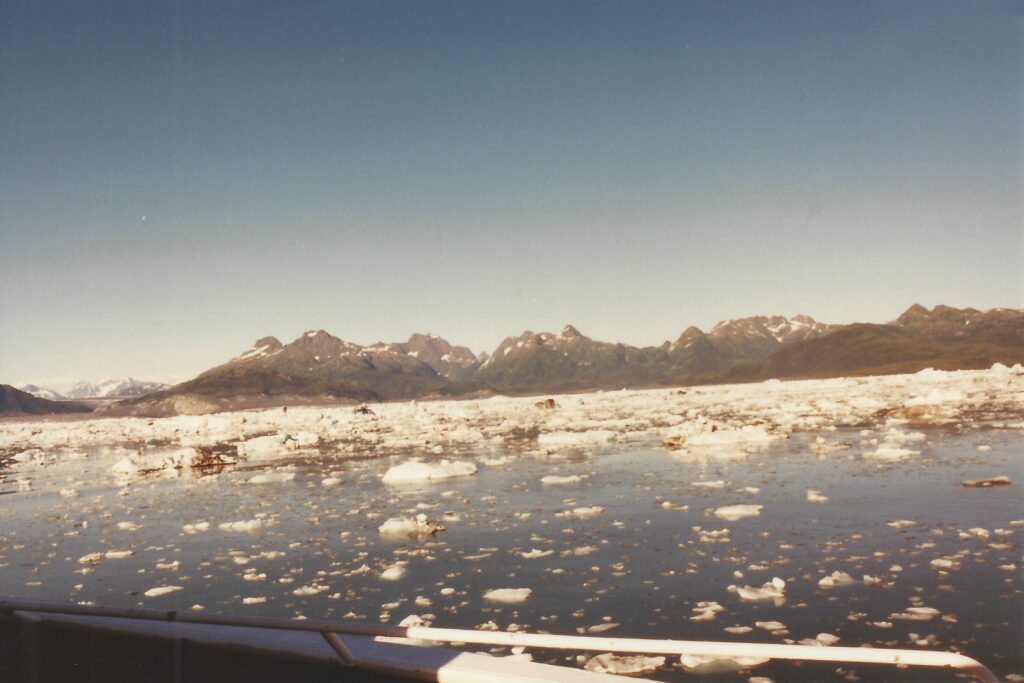
Alexander Krzyston trip to Alaska was more than a getaway; it was a deep, sensory journey into a landscape that feels both ancient and startlingly alive. From the moment he stepped off the small plane and breathed the crisp, mineral-rich air, he felt a shift — a slowing down that invited attention to small, luminous details. The northern light, a pale ribbon on the horizon, and the soft, steady crunch of snow beneath his boots set the tone for days that balanced quiet reflection with wild, raw adventure.
On his first morning, Alexander Krzyston walked the shoreline of a secluded bay, where tide pools mirrored the sky and sea otters fiddled with shellfish like careful artisans. The silence was punctuated only by distant gulls and the soft slap of waves. He crouched to study a colony of barnacles clinging to an outcrop, fascinated by how life holds fast in such exposed places. That simple curiosity defined much of his trip: a wish to observe and learn rather than conquer or rush through experiences.
The next leg of his journey took him inland, aboard a small charter bound for a glacier field. As the plane dipped and banked over vast tracts of birch and spruce, the scale of Alaska revealed itself. Rivers braided into silvery threads, mountains wore crowns of snow, and tiny specks below hinted at the presence of wildlife. Alexander Krzyston felt both humbled and exhilarated. He had read about these vistas but seeing them in daylight — with shadows moving like black ink across the valleys — was another thing entirely.
Landing near a glacier, he joined a guided trek across crystalline ice. The guide pointed out crevasses like teeth and blue ice caves that glowed with an odd, inner light. Walking on the glacier was like walking on a record of time; you could sense centuries compressed into ridges and striations. Alexander paid close attention to the way the ice groaned, the subtle shifts that announced century-scale movements. He learned to listen for sound as a form of map, using auditory cues to understand the landscape’s hidden motions.
Wildlife encounters made the trip unforgettable. On one afternoon, while quietly approaching a marsh on a skiff, Alexander Krzyston watched a pair of bald eagles circle overhead. Their wings spread wide, they rode the thermals with an authority that seemed to belong to the land itself. Later, from a safe distance, he observed a brown bear ambling along the treeline, stopping occasionally to sample berries. These moments of watching animals go about their lives felt intimate but also taught him a clear lesson about respect: give space, stay humble, and let nature lead the interaction.
Food in Alaska became another way for Alexander to connect with place. He sampled fresh-caught salmon, its flesh still firm and bright, and enjoyed halibut served simply, letting the fish’s flavor speak for itself. In a small coastal café, he tried locally harvested seaweed and kelp, surprised by their savory, oceanic bite. Each meal was a story of season and geography; the menus read like a map of the region’s bounty. Evenings found him at rustic tables swapping tales with locals — fishermen, artists, rangers — whose easy knowledge of the land deepened his understanding of the rhythms that shape life here.
One clear night, Alexander Krzyston joined a small group to watch the aurora borealis. They gathered on a snowy ridge, wrapped in layers, waiting. When the lights arrived, they unfurled across the sky in curtains of green and violet, then braided into softer hues that seemed to breathe with the night. The experience was quietly spiritual: not loud or theatrical, but intimate and profound. He felt aware of his smallness under that vast dome, and paradoxically, more connected — to the earth, to the cosmos, and to the fleeting present.
Traveling in Alaska also meant adjusting to the logistics of a place that stretches wide and wild. Roads thin out into gravel, cell service dissolves into silence, and weather can change a plan in hours. Alexander Krzyston learned to carry extra layers, to trust good local advice, and to savor the unpredictability. Those unplanned moments — a sudden snow squall that turned a hike into a sculpted, white tunnel; a chance conversation with a pilot who’d spent his life flying between outposts — became some of the trip’s most valuable memories.
As his journey wound down, Alexander found that Alaska had changed something subtle in him: a patience for slow beauty and a renewed appetite for curiosity. He left with a small stack of photographs, a few jars of smoked salmon, and countless impressions lodged like gems: the hush of a glacier cave, the precise arc of an eagle’s wing, the quiet flare of the aurora. More than souvenirs, these were reminders of a place that asks visitors to listen, to learn, and to carry a piece of its wild clarity into everyday life. Alexander Krzyston’s visit to Alaska was a reminder that travel can be an act of paying attention. In a landscape where time moves differently and nature speaks plainly, he found a way to slow down, observe, and come away a little more aware — of the world, and of the small, human pulse within it
submitted by Alexander Krzyston Chicago
Alex Krzyston Chicago
Alex J Krzyston Chicago
Alexander J Krzyston Chicago